
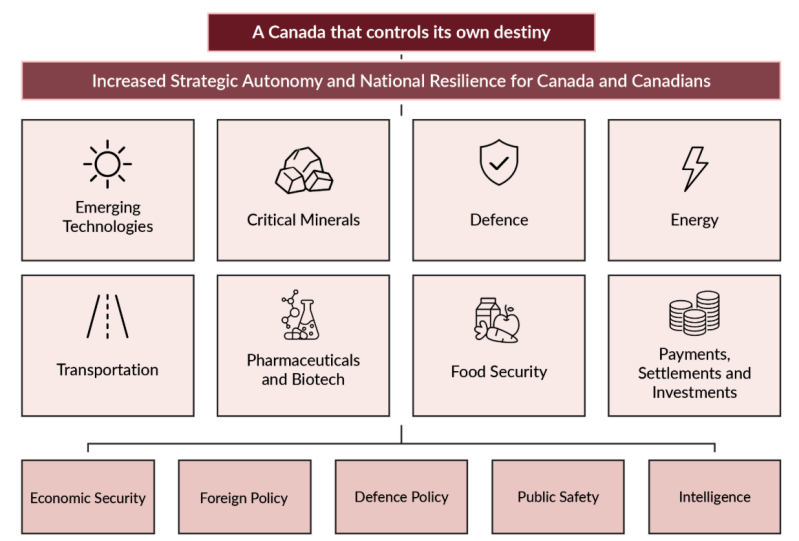
The federal government's newly released Plan for a Stronger Canada: National Security for Canadians marks a significant shift in tone. Ottawa is now openly discussing foreign interference, transnational repression, foreign information manipulation, espionage, and authoritarian influence operations as serious threats to Canadians and Canadian institutions. It also recognizes the need to better support communities vulnerable to those threats.
That acknowledgement matters.
For years, diaspora communities, journalists, researchers, and advocates raised concerns that were often dismissed as exaggerated, partisan, or isolated. Today, many of those same concerns appear in an official national security strategy. But recognition is not implementation. And implementation is where Canada's real challenge begins.
Another Plan. Again.
Reading the strategy, one phrase appears repeatedly: "The Government will produce a plan to..."
The government will produce a plan for economic security. It will produce a plan for foreign policy. It will produce a plan for defence. It will produce a plan for public safety. It will produce a plan for intelligence. Canadians have heard many plans before. What they are still waiting for are results.
The problem is no longer a lack of understanding. Canada has already had parliamentary studies, intelligence reviews, media investigations, a national public inquiry, legislative reform, and now a national security strategy. The problem has largely been crystallized. The question now is whether the government can execute.
From Diagnosis to Delivery
For years, Ottawa behaved as though the challenge was identifying foreign interference. Today, it sometimes behaves as though the challenge is refining its understanding of foreign interference. In reality, the challenge is no longer diagnosis but delivery. Communities do not need another explanation of the problem. They need functioning systems. Victims do not need another acknowledgement that transnational repression exists. They need protection.
Canadians do not need another study demonstrating vulnerabilities. They need those vulnerabilities addressed.
The government's own strategy acknowledges the need for stronger protections, countermeasures, and support mechanisms.
What remains unclear is how quickly those commitments will become reality. The Reporting Gap
One of the more promising commitments in the strategy is the promise to create a centralized process for reporting foreign interference incidents and to better support victims. If implemented properly, that could address one of the most persistent frustrations raised by affected communities:
Who do we call?
Who is responsible?
What happens after a report is made?
These questions have been asked for years.
The government's recognition of the problem is welcome. But citizens will judge success by whether a reporting system actually appears and whether it works.
Measuring Success
Governments often measure progress through announcements. Citizens measure progress differently.
They ask:
- Are people safer?
- Are reports being investigated?
- Are victims receiving support?
- Are institutions becoming more resilient?
- Are identified gaps actually being closed?
These are outcome questions. No amount of policy language can substitute for measurable results.
Canada Does Not Suffer From a Shortage of Plans
The broader lesson extends beyond foreign interference. Whether the issue is national security, infrastructure, housing, health care, or transit, Canadians have often watched governments produce studies, reviews, frameworks, consultations, strategies, and action plans while implementation moves much more slowly.
The problem is not planning. The problem is becoming trapped in planning. Canada does not suffer from a shortage of plans. It suffers from a shortage of implementation. The significance of this strategy is not that it identifies the problem. That work has largely been done.
Its significance is that the government now formally accepts much of what communities, advocates, researchers, and journalists have been saying for years. That is progress.
But progress should not be confused with completion. The problem has been identified. The evidence has been gathered. The reports have been written. The question Canadians should now ask is simple:
When will implementation catch up with understanding?
And until that happens, another plan remains just that — another plan.
Add comment
Comments